
Emergency call logs to French aid workers lay bare the risks taken every day by those trying to reach Britain.
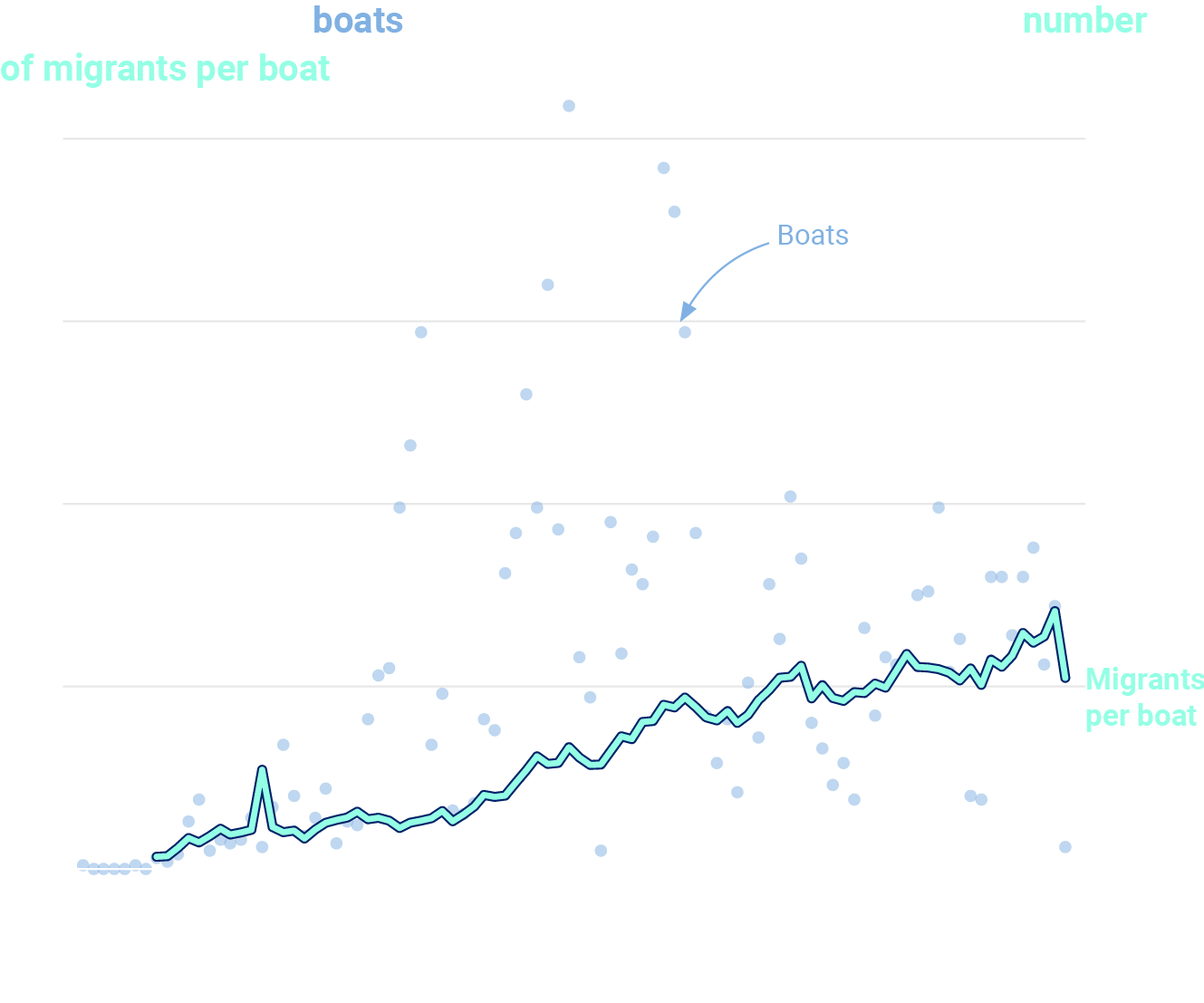
As more and more migrants crowd on to each boat, we chart:
Chaos in the Channel
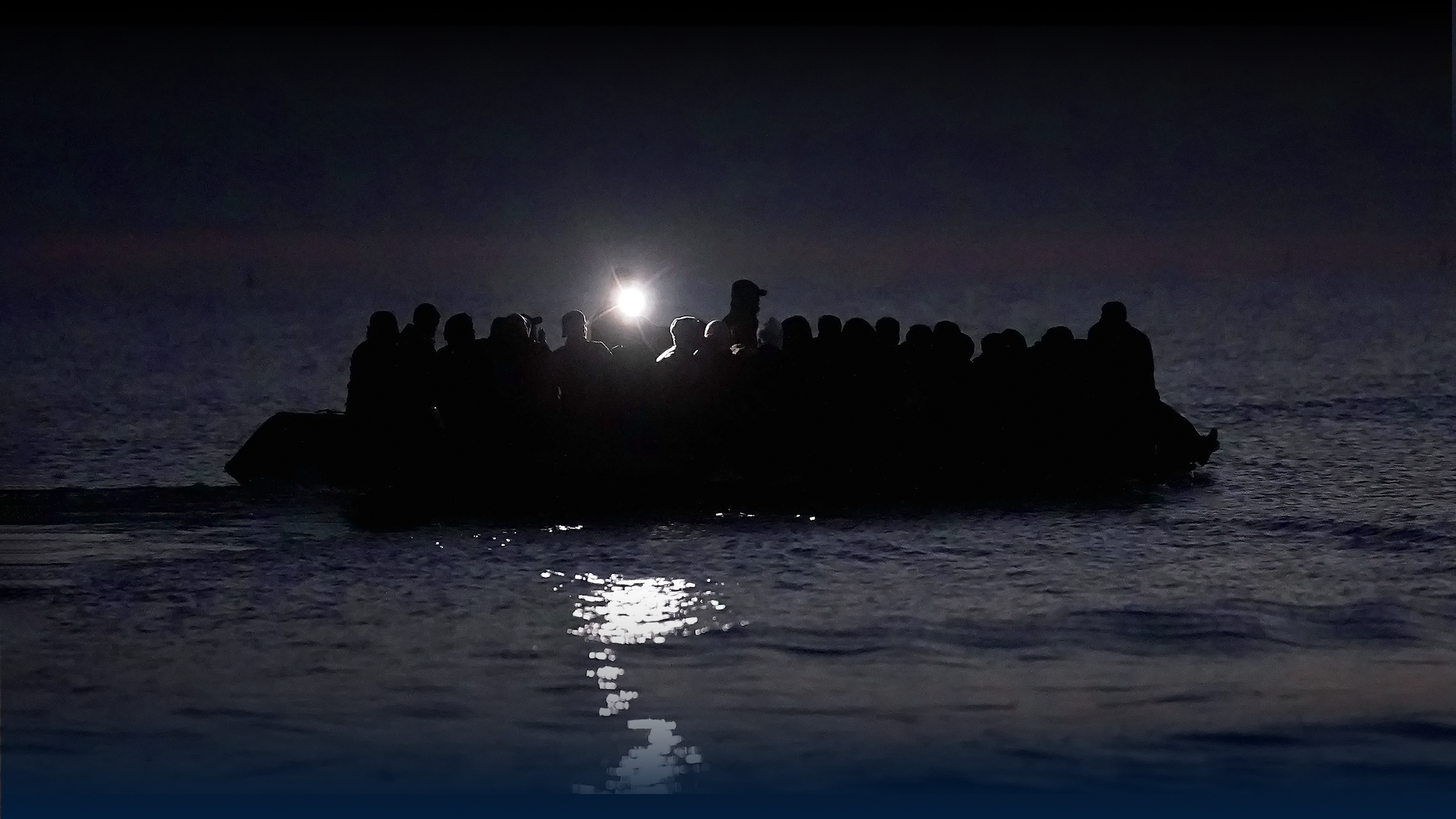

Emergency call logs to French aid workers lay bare the risks taken every day by those trying to reach Britain. As more and more migrants crowd on to each boat, we chart:
Chaos in the Channel
Tuesday October 14 2025, The Times
This is one of more than 1,000 distress calls from migrants on small boats, to aid workers in France, which underline the risks being taken in the Channel:
“We are in a boat and we have a problem, please help. We have children and family in a boat ... Water is coming in the boat and we don’t have anything for it ... please help me bro, please, please, please. We are in the water, we have a family.”
Using the logs for calls like these, The Times has built a picture of the crisis unfolding like never before. Our reporter conducted dozens of interviews with law enforcement, rescuers and charities on both sides of the water, as well as migrants boarding boats, to shed light on the chaos.
French coastguards rescue hundreds of migrants each month. It is not uncommon for the ships that patrol the coast to pull more than 100 people from the sea in a day.
Back in November 2021 the deaths of 27 people in the Channel shocked Britain and France. In Calais the local MP warned that the stretch of water was at risk of becoming an “open-sky graveyard”. In Kent residents lined up with candles to commemorate the dead.

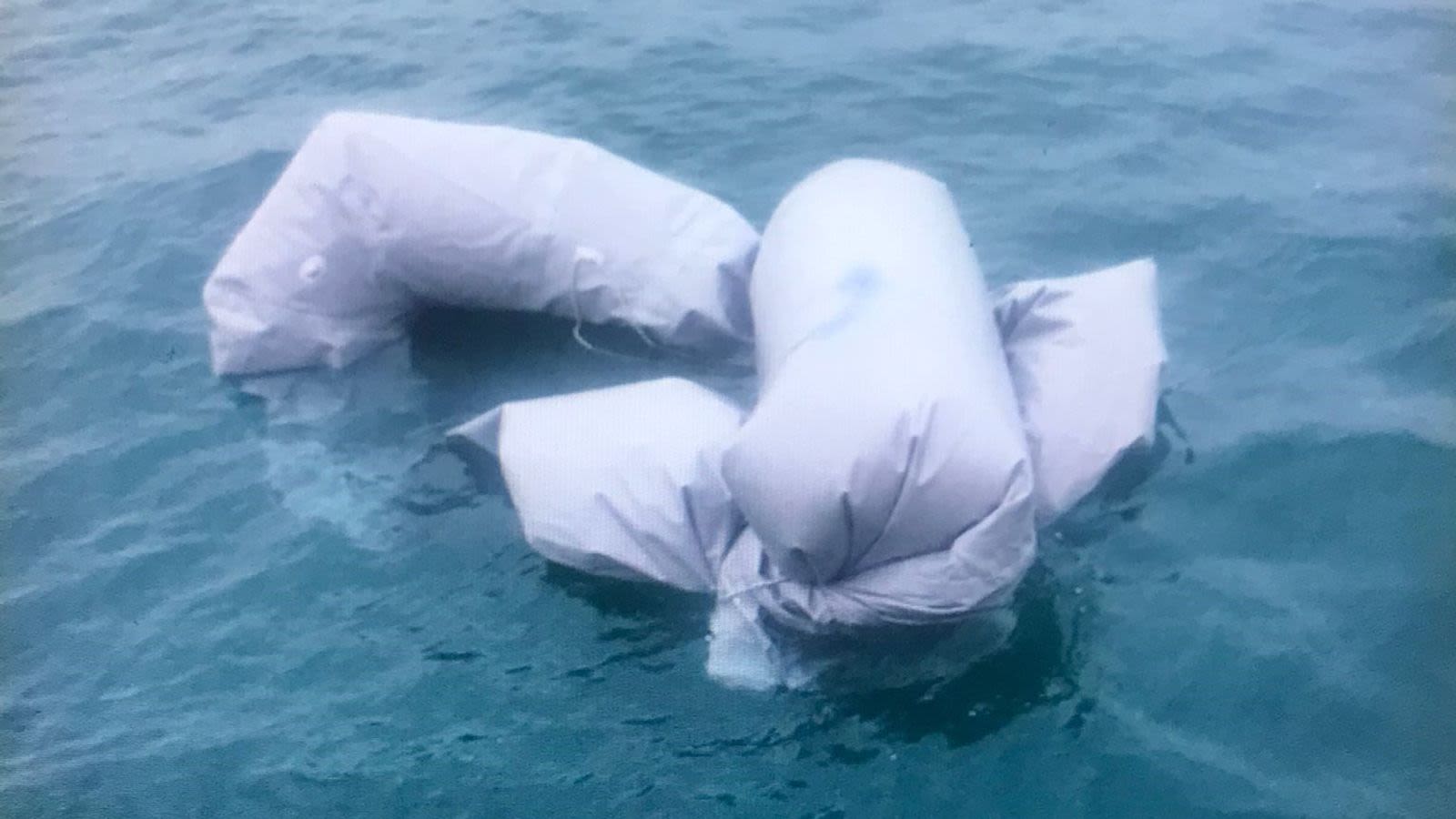
The remains of the small boat the 27 migrants had been travelling in (Sky News)
The remains of the small boat the 27 migrants had been travelling in (Sky News)
Yet in the years since, 119 people have died making the crossing to Britain.
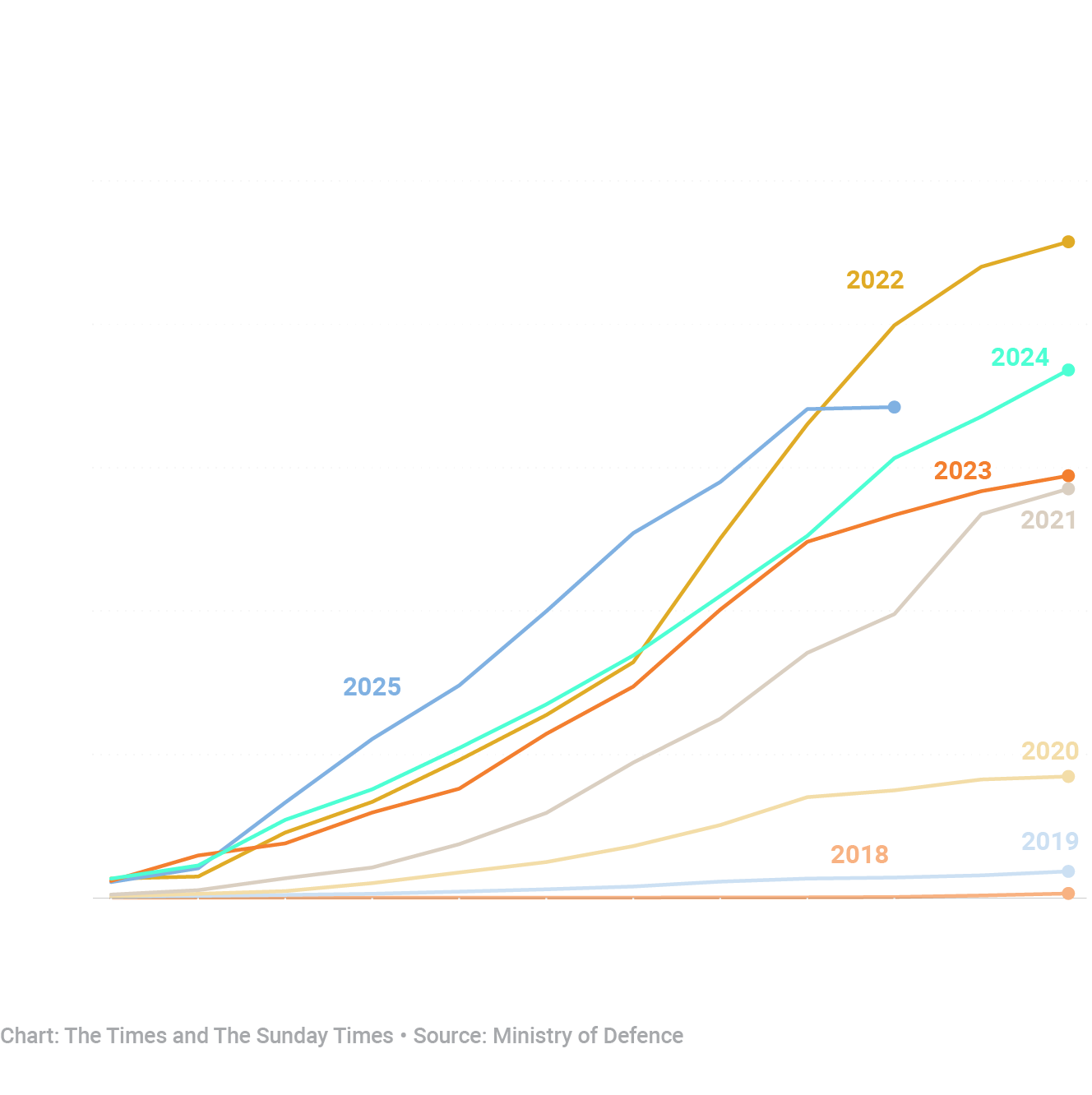
The struggle to contain the number of migrants crossing the Channel in dinghies has been a thorn in the side of successive governments. More than 50,000 small boat migrants have illegally entered the UK since Labour won the general election, and the total for 2025 so far is higher than the figure recorded by this point in 2024:


Sir Keir Starmer has so far been unable to solve the crisis and faces increasing public anger. Riots have broken out over the thousands of asylum seekers housed in hotels after arriving on boats. Seven home secretaries have tried and failed to break the business model of the smugglers.
Away from Westminster, chaos reigns in the Channel. The size of the inflatable dinghies used has increased and the number of migrants squeezed on to them has grown. In August and September this year two small boats were apprehended with more than 100 people on board.

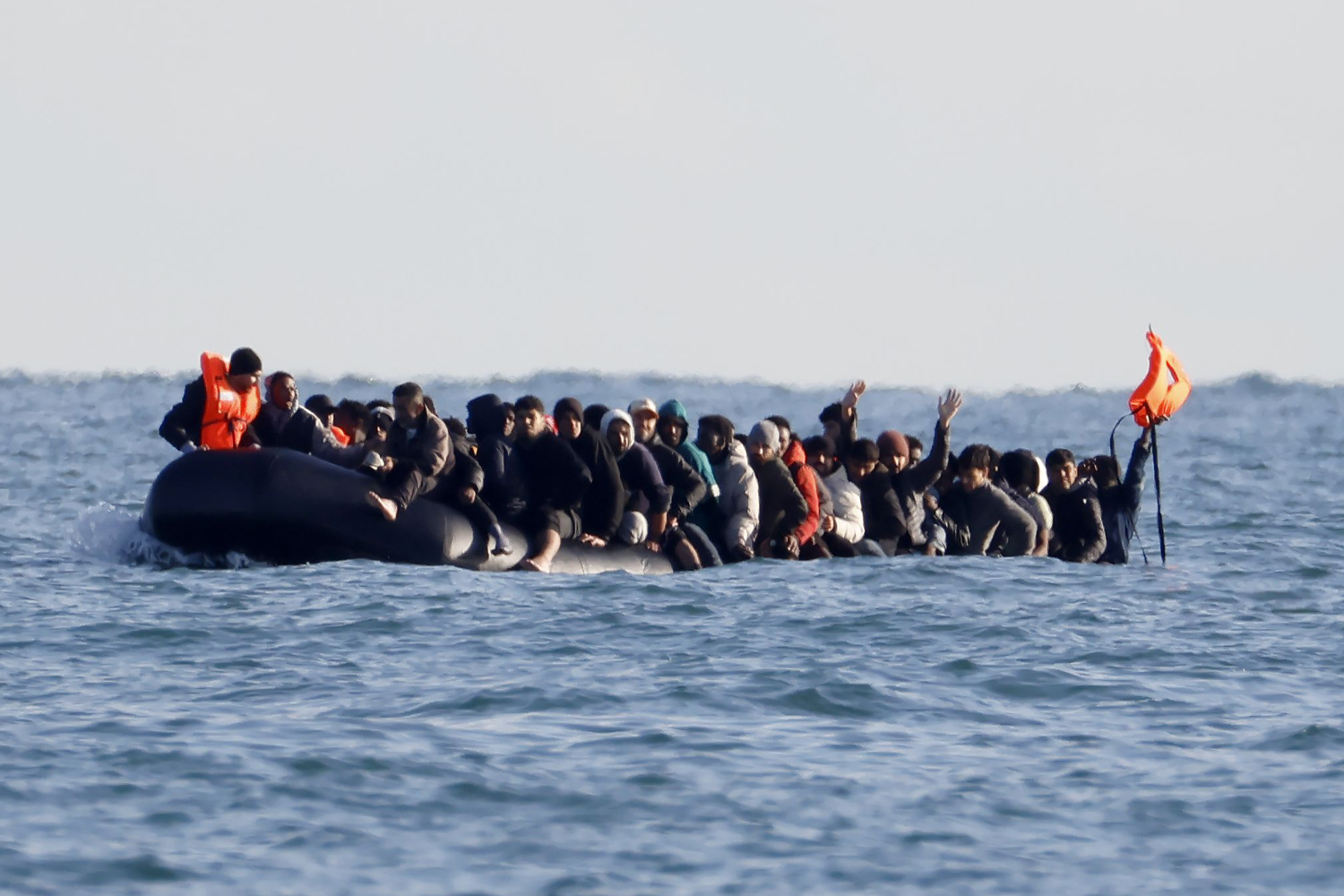
A dinghy thought to be carrying 120 migrants on September 30 (Steve Finn for The Times)
A dinghy thought to be carrying 120 migrants on September 30 (Steve Finn for The Times)
Efforts by other European countries to expel failed asylum seekers or migrants with criminal records have driven more towards Calais and Britain.
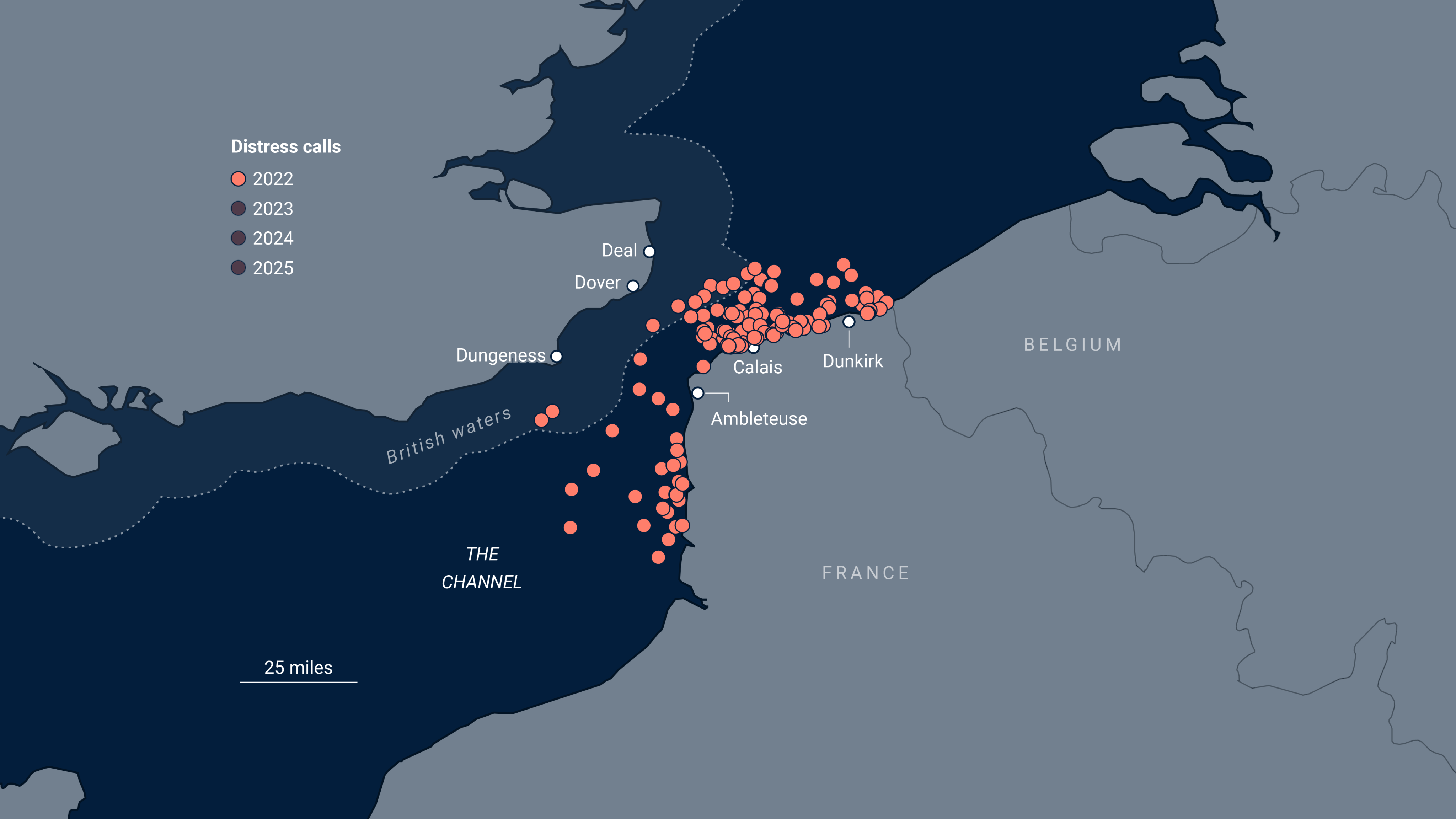
The call log data was provided to The Times by the French aid organisation Utopia 56 after reporters spent several weeks over three months inside camps and on beaches observing smugglers pack migrants into boats. The charity takes distress calls from migrants and provides interpretation and reassurance, then passes the information on to French coastguards.
“Often people on the phone are panicking,” Felicie Penneron, 24, a co-ordinator for Utopia 56, said. “We cannot do anything besides listen, call for help ourselves, and tell them that help will come as fast as it can. But sometimes it takes more than an hour for that help to arrive.”
Even if a boat is still afloat, danger abounds. “These are boats that are supposed to take 10 or 12 people normally, and there can be 80 people aboard,” she said.

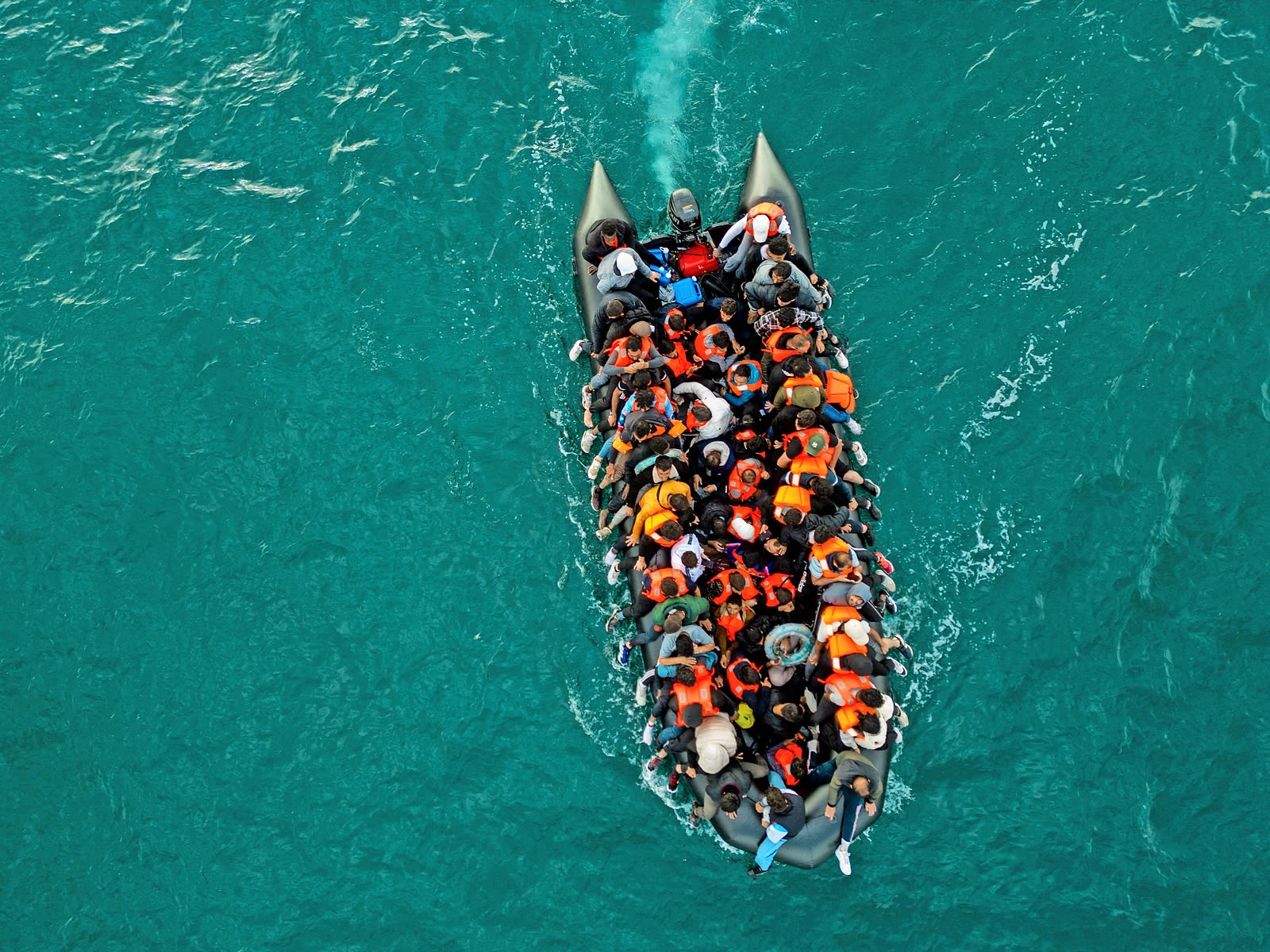
August 2024 (Chris J Ratcliffe/Reuters)
August 2024 (Chris J Ratcliffe/Reuters)
“They are always in danger. But sometimes their engine won’t be working and the boat is stuck, sometimes there is a hole, sometimes the boat is sinking. We call MRCC [the Maritime Rescue Co-ordination Centre], but sometimes there just aren’t enough boats available for all the rescues that are happening at once in the Channel.”

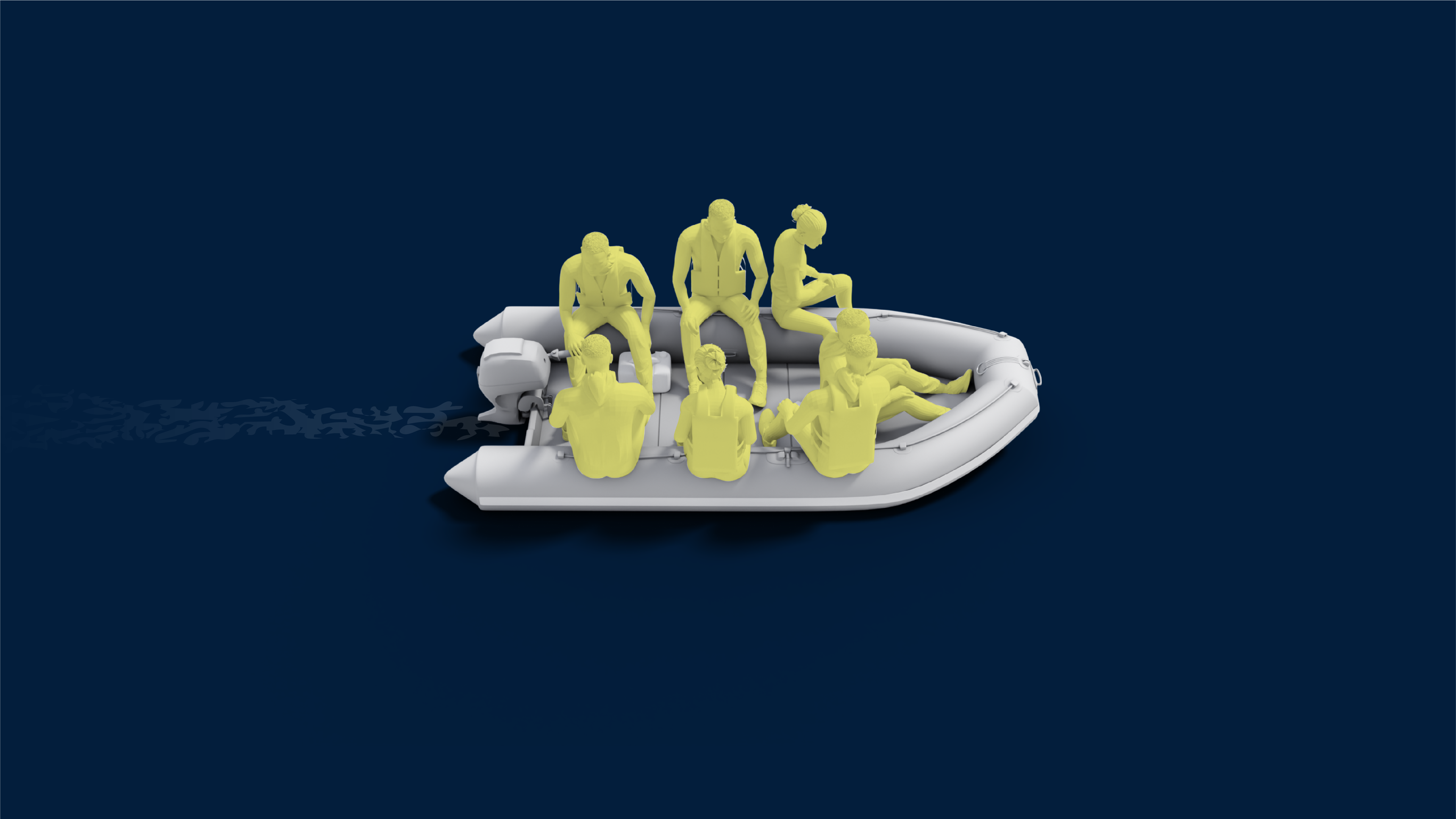


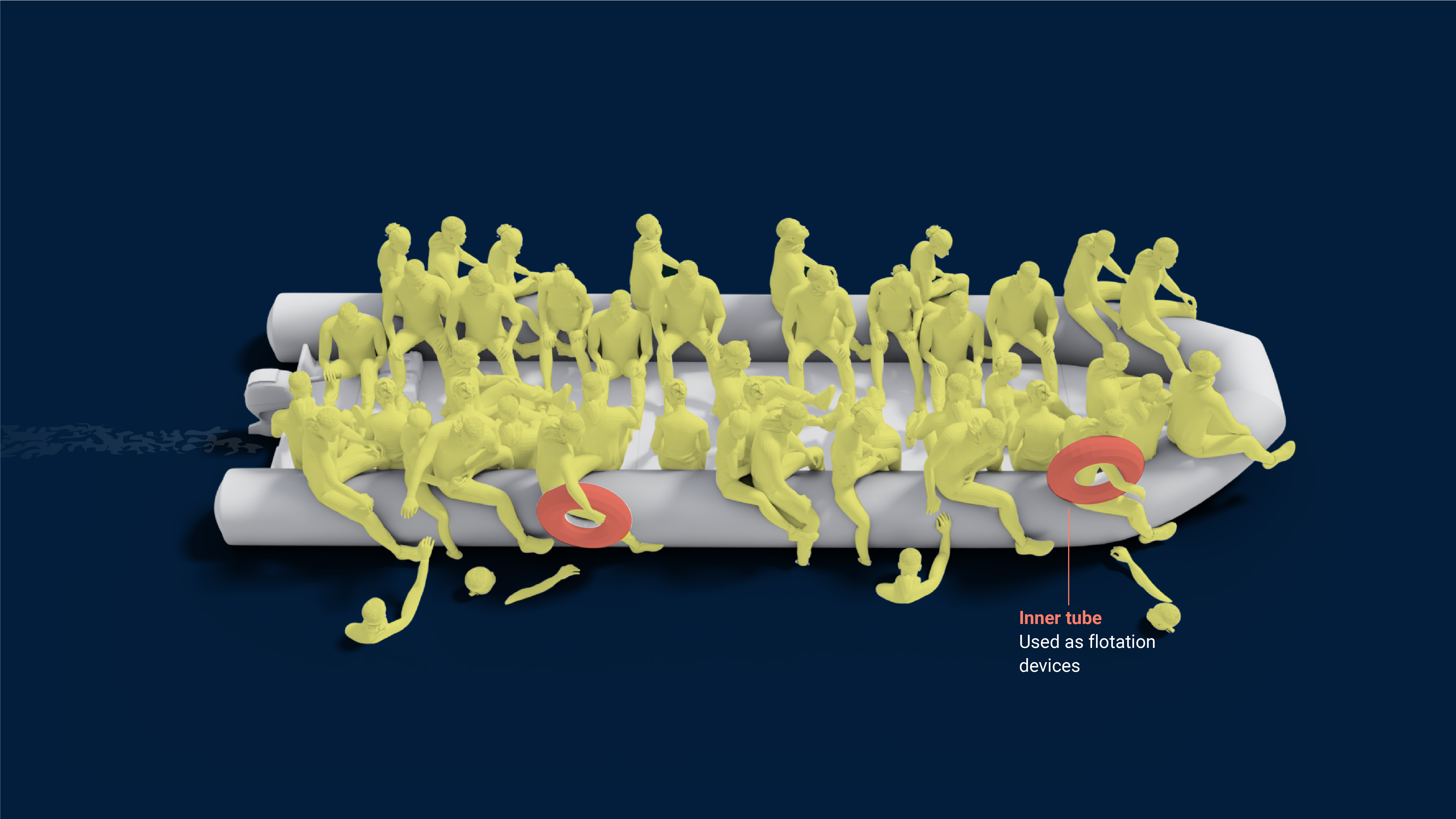


The first recorded small boat landed in Britain on January 31, 2018, containing just seven people. During 2020 the average number was 11.
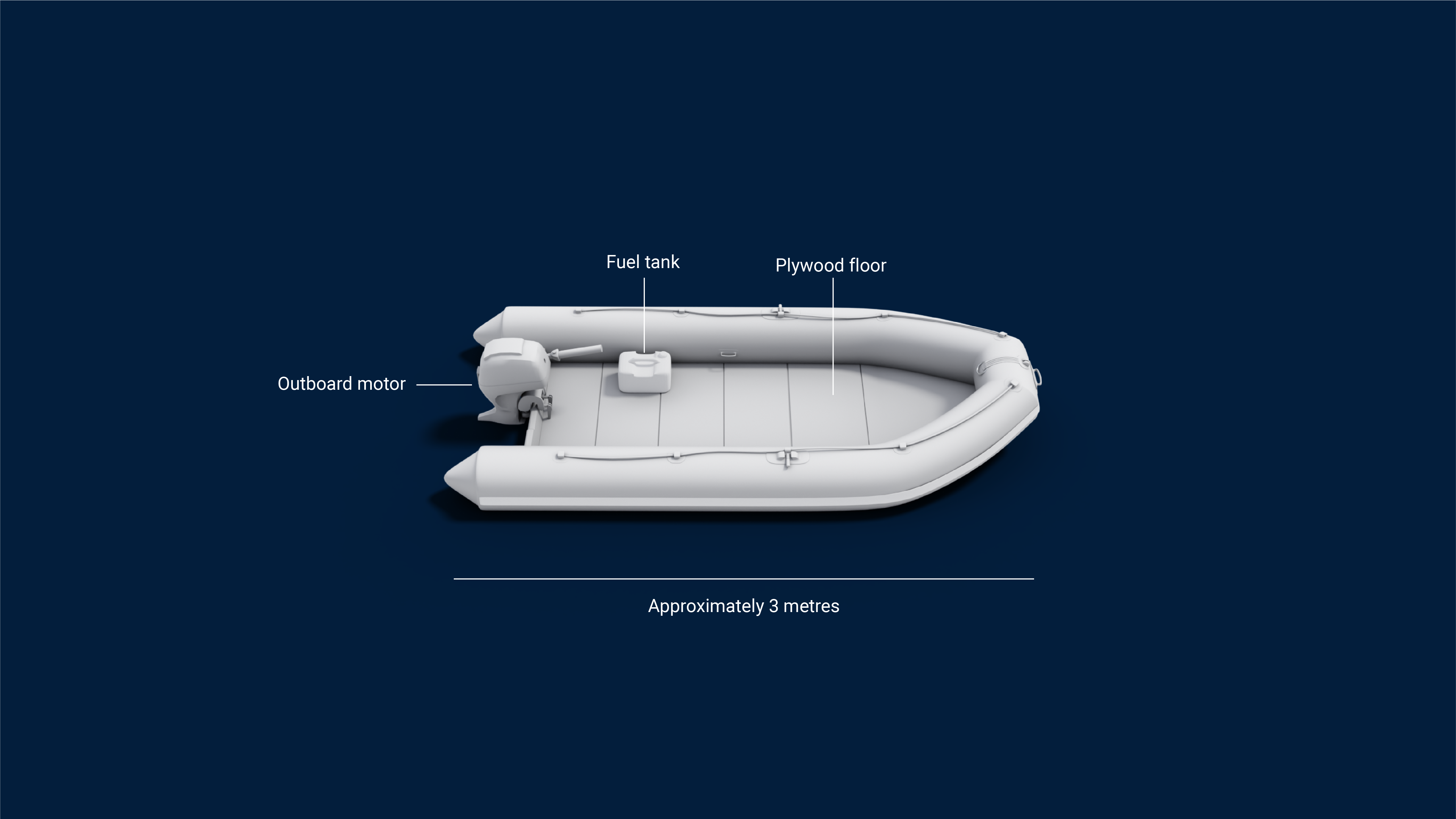
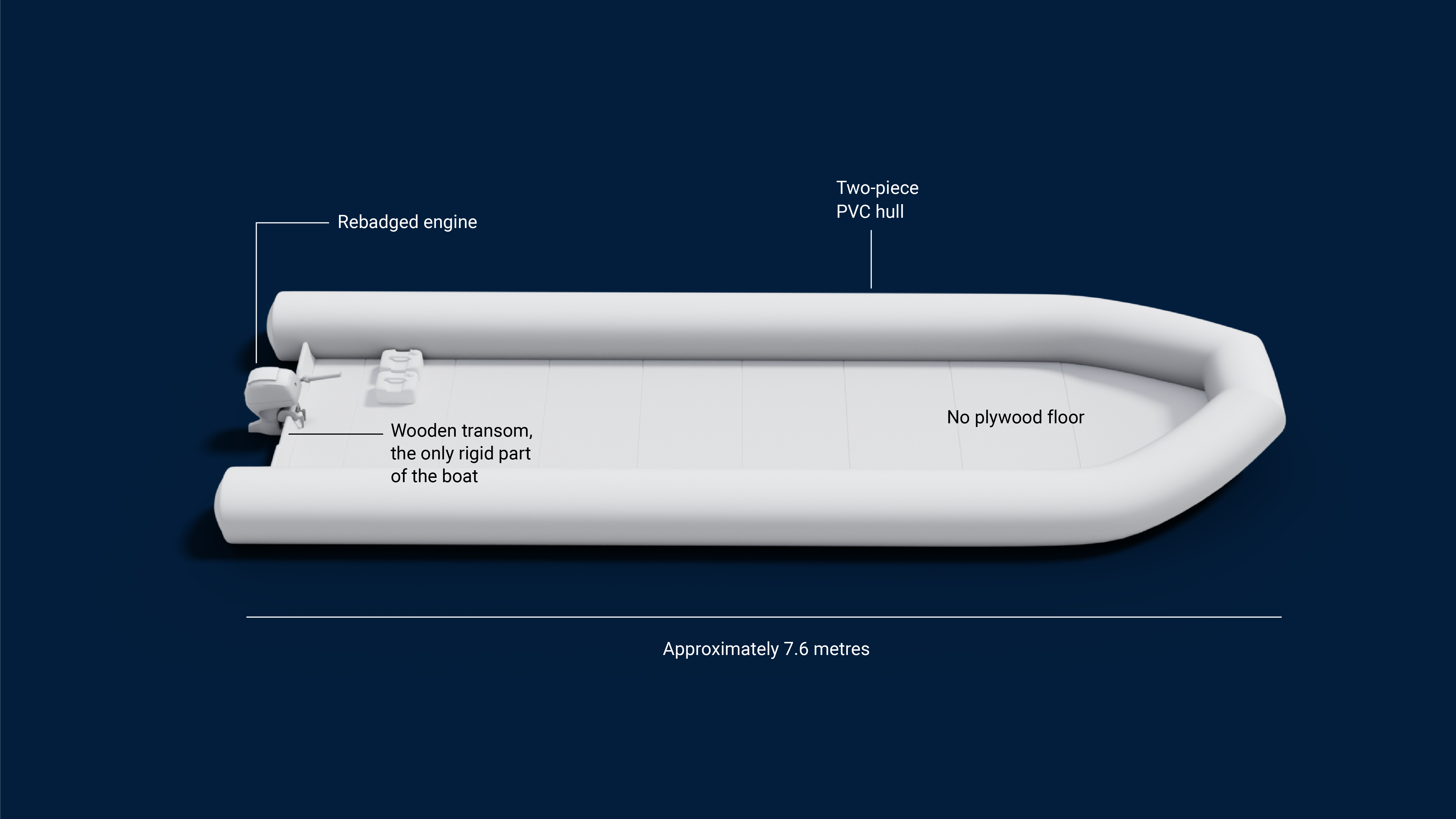
Some dinghies have plywood placed over the sheet-plastic floor, but often smugglers do not bother with this.
By 2022, when our data begins, the average number of people per boat had grown to between 20 and 40.
As the boats became increasingly overloaded, the risks grew. In December that year a boat with 47 people on board collapsed in the middle of the Channel.
In most cases the two halves of the hull are attached with a sheet of PVC to make the floor of the boat. Boats without a rigid floor are more dangerous: they can fold in half, trapping migrants between the two inflatable sides.
Often the engine is rebadged to appear more powerful than it really is.
Twenty-four of the 147 calls received in 2022 were made in December — more than five per week. On December 14 alone there were seven ranging across more than 30 miles of sea.
The boat that collapsed with 47 people on board in December 2022 could rapidly have become the deadliest disaster on record, if not for Captain Raymond Strachan and his crew. The captain was asleep below deck on his scallop-dredging vessel, the Arcturus, when a shout arose on deck.
“It was chaotic,” Strachan recalled. “They were pulling themselves up over the top of the fishing gear.

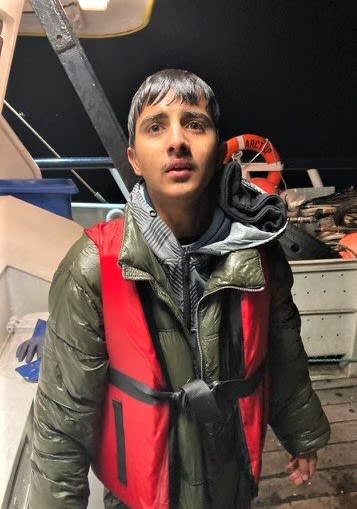
One of the survivors had fled the Taliban in Afghanistan (Oceanic Drifter Fishing)
One of the survivors had fled the Taliban in Afghanistan (Oceanic Drifter Fishing)
“They were standing on top of each other to get to safety. Two people died inside that boat and I saw another man dying.”
He and his crew saved 31 people from the freezing sea, including a 12-year-old Afghan boy, whose family had been murdered by the Taliban.

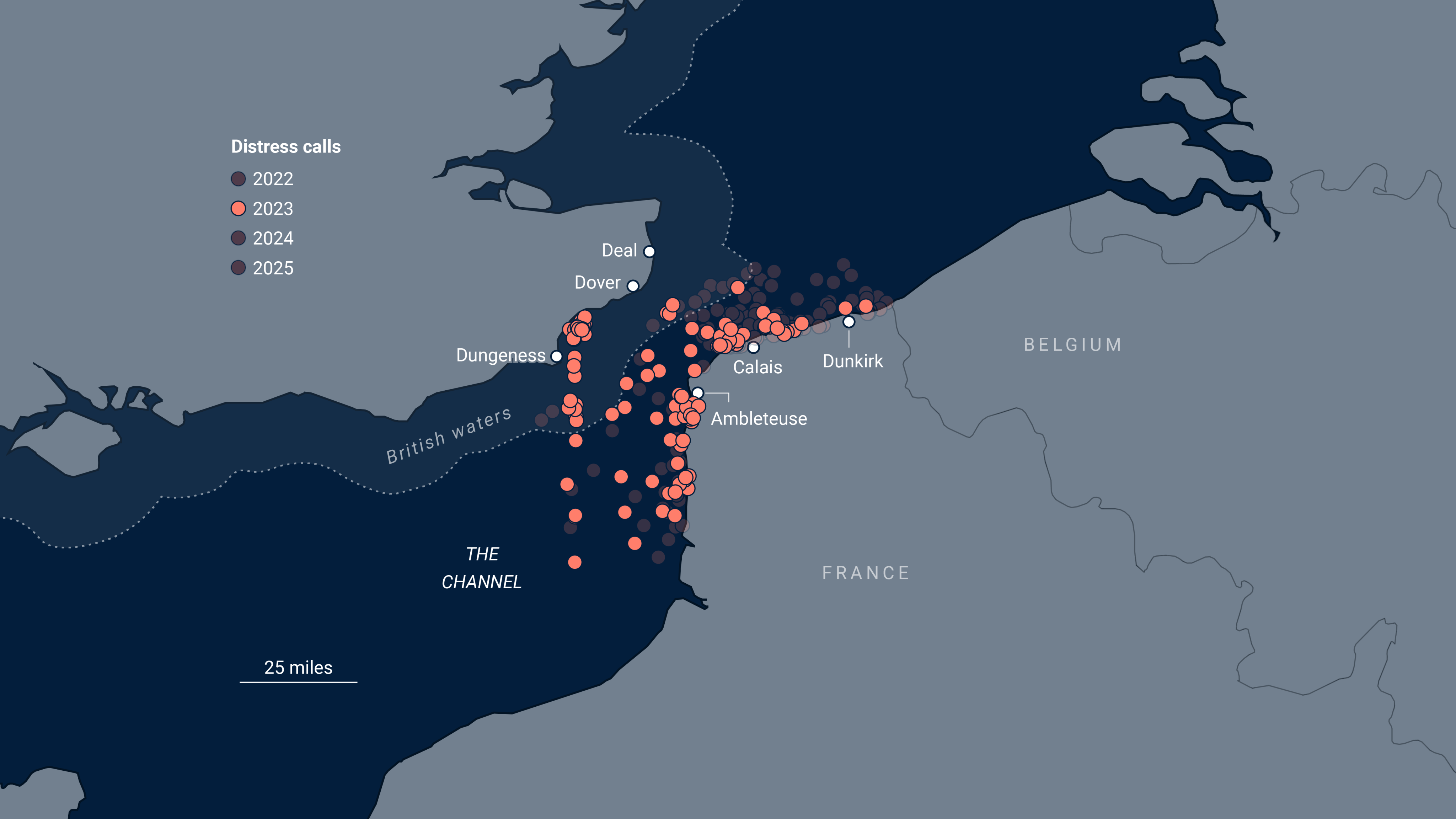
Data from the at least 106 calls in 2023 shows how the danger at sea rises rapidly in winter. The majority of crossings take place in summer, but the bulk of distress calls are placed in January, February, March, November and December.
In September 2023 4,729 people made the crossing yet not a single distress call was placed. In December fewer than 1,000 migrants crossed but 26 boats called for rescue.
The same year a trial in the UK laid bare the flimsy construction of the small boats.
Hewa Rahimpur, 30, secured boats, engines and lifejackets and arranged their delivery to France just in time to meet paying customers. He helped thousands of migrants cross to Britain.

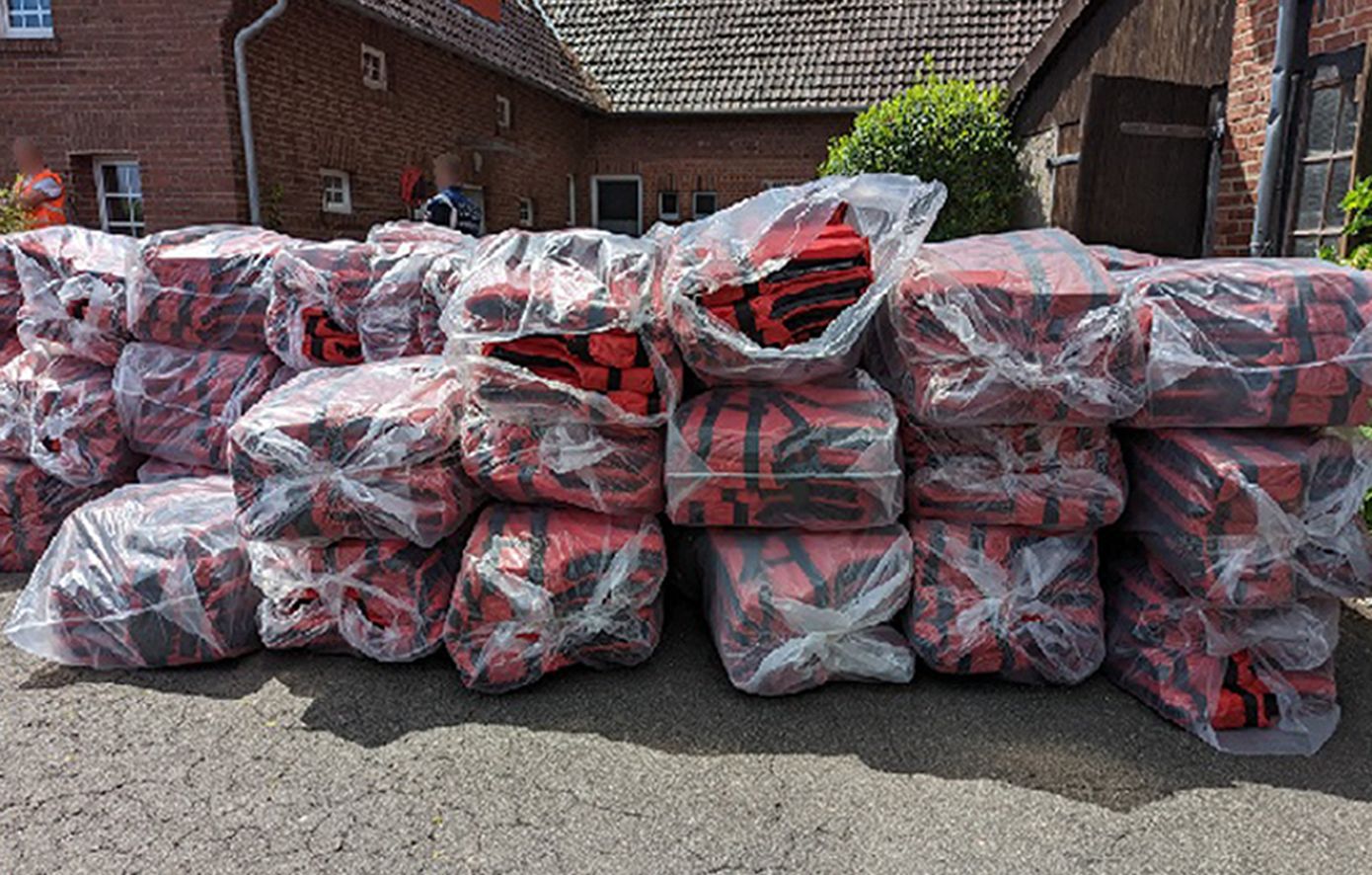
Lifejackets recovered in northwest Germany as part of the police operation against Rahimpur's gang (PA)
Lifejackets recovered in northwest Germany as part of the police operation against Rahimpur's gang (PA)
The boats would be handed to groups of migrants, including women and children, in Calais and Dunkirk. They were so flimsy that some were held together with gaffer tape. Yet despite the dangers, Rahimpur’s gang was responsible for as many as 10 per cent of crossings over 12 months.

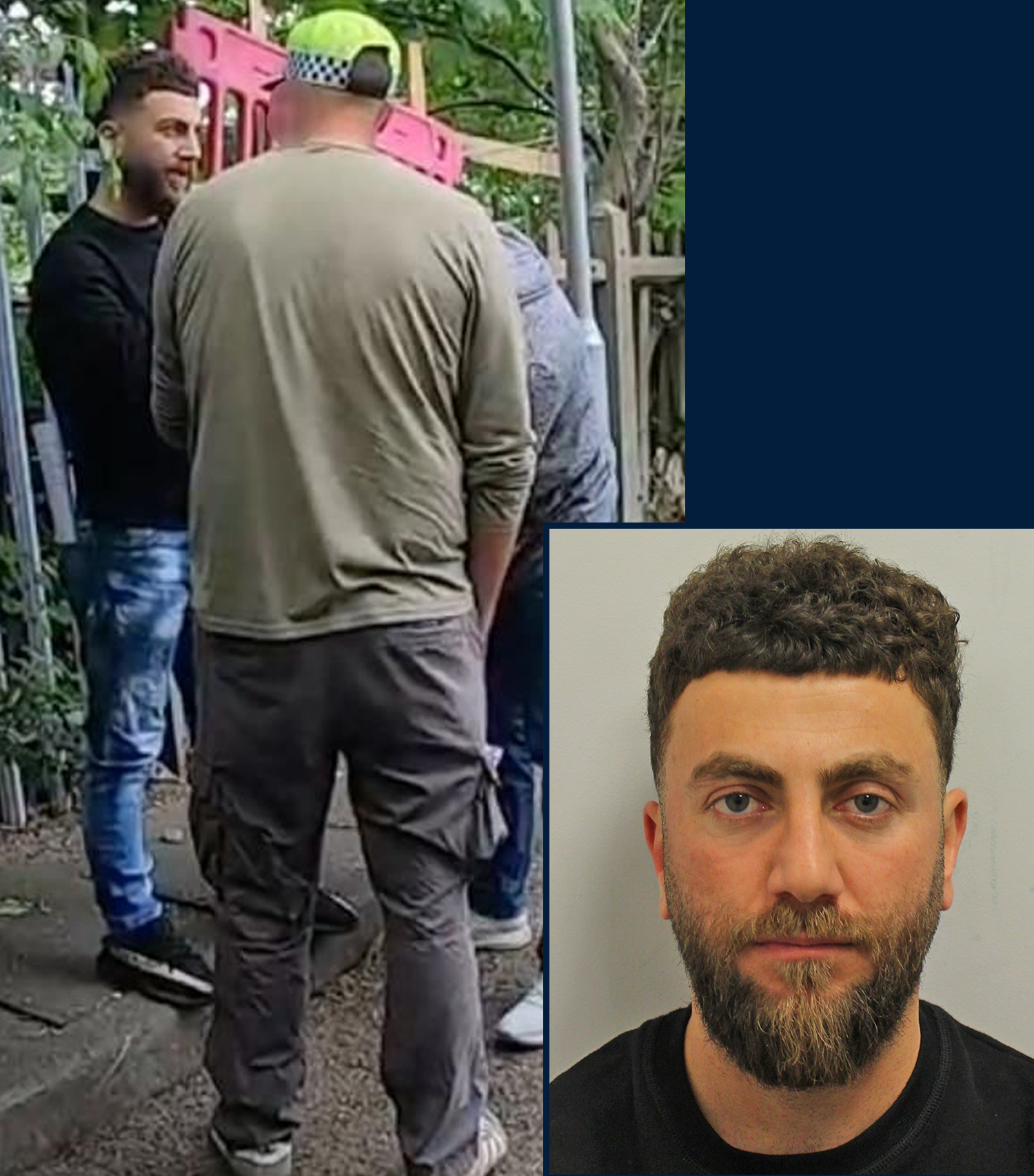
Hewa Rahimpur was detained by National Crime Agency officers in east London in May 2022 (NCA/PA)
Hewa Rahimpur was detained by National Crime Agency officers in east London in May 2022 (NCA/PA)
The National Crime Agency’s senior investigating officer, Kate Philpott, said that the quality of the boats had reduced, putting migrants at increased risk. After Rahimpur’s conviction, she described “individuals really crammed on to these boats with bigger risks, going on to the boats without actual lifejackets”.
She added: “The worst conditions I have seen are 80 people on a boat which was so low in the water that it looked like a raft. The majority of people had no lifesaving equipment. A couple of people had rubber rings and some insides from tyres.”
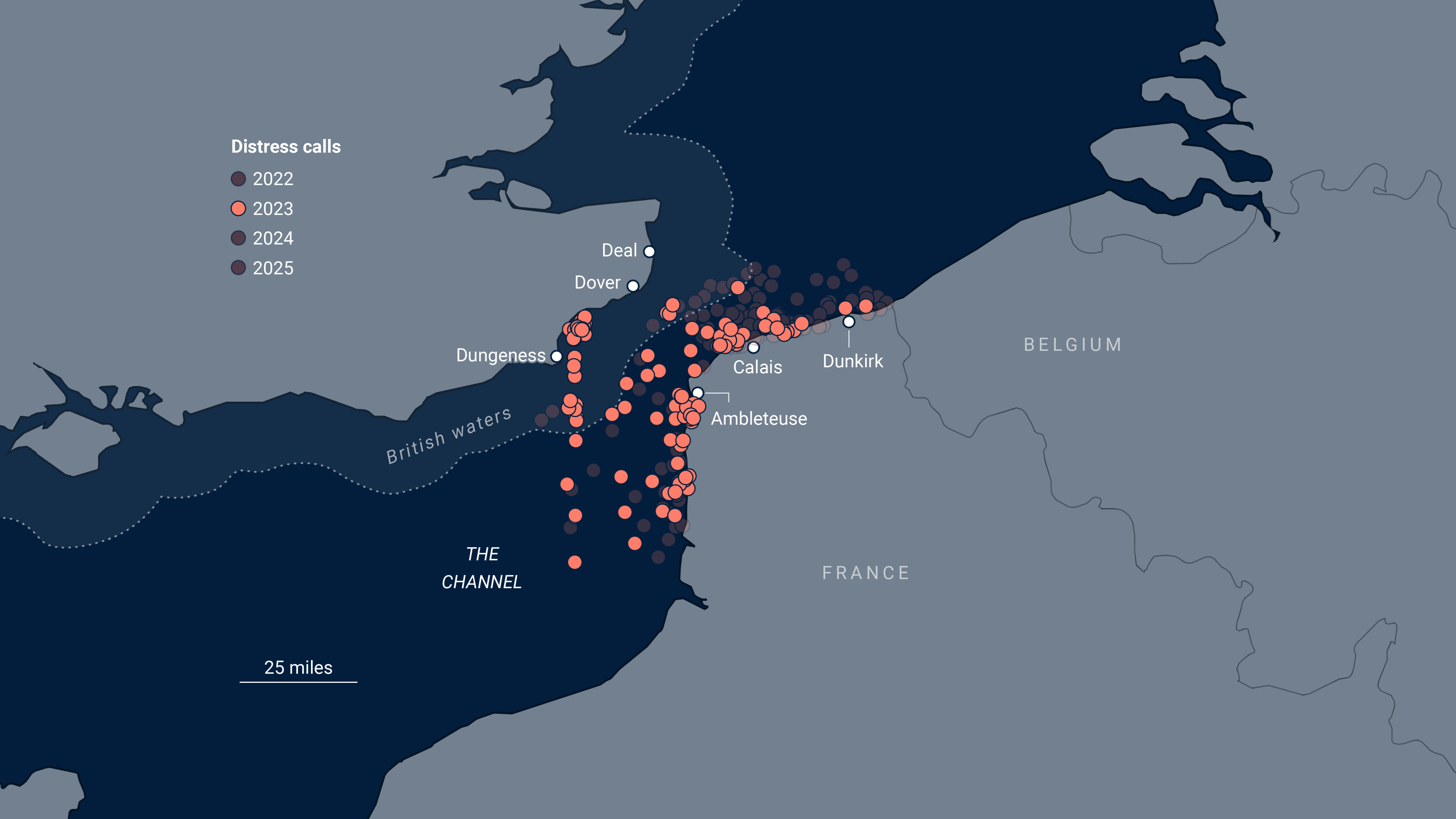

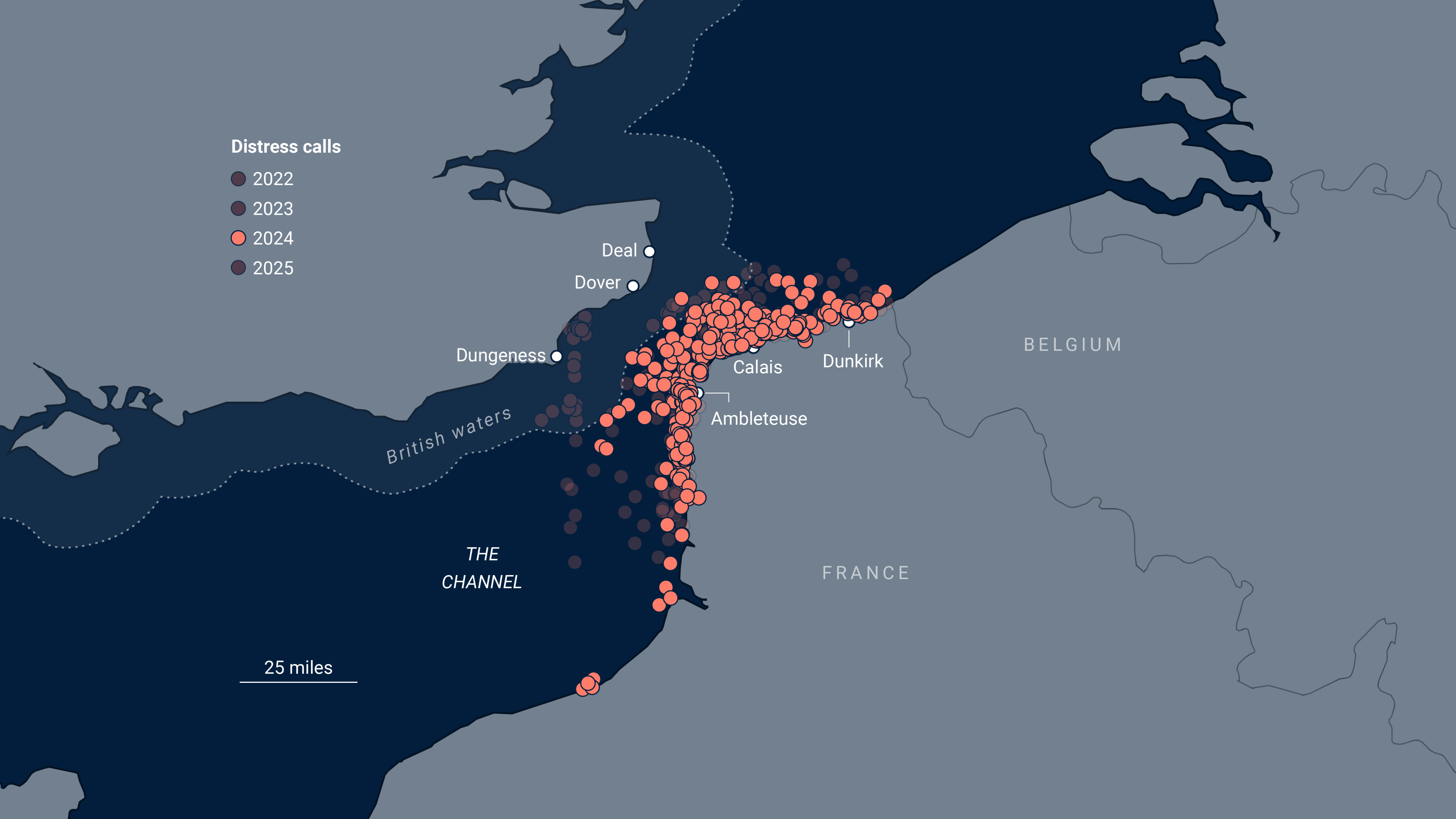
As more and more people made the crossing, 2024 became the deadliest year on record. In total 73 people died on the crossing — more than all previous years put together.
Far more migrants called for help from the sea: Utopia 56 received 418 calls in total. In a single day in November volunteers took 16 separate pleas for help.
On September 3 a pregnant mother and six children were among 12 dead after a boat capsized off Cap Gris-Nez. The tiny boat, less than seven metres long, had more than 70 people on board. Only eight had lifejackets. Gérald Darmanin, the French interior minister at the time, said that the quality of boats was deteriorating and, once damaged, they would sink “very, very quickly”.
The deadly autumn continued.

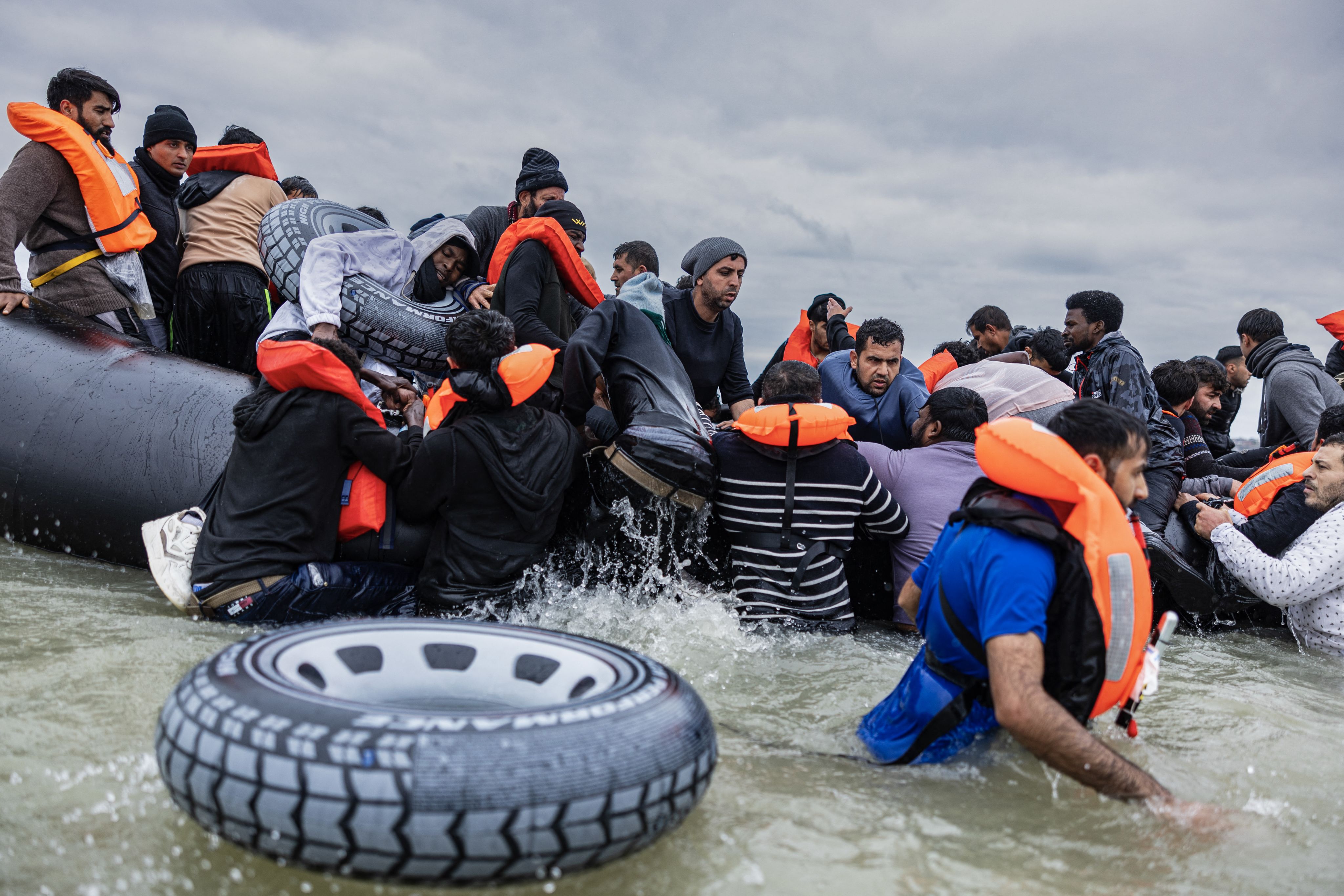
October 2024 (Sameer al-Doumy/AFP/Getty Images)
October 2024 (Sameer al-Doumy/AFP/Getty Images)
Weeks later a two-year-old born in Germany to a Somalian mother was crushed to death with three others during a “wave of panic” after the engine of an overcrowded dinghy failed and passengers rushed to get off.
In October a one-month-old baby named Maryam Bahez died when she slipped from her father’s hands on a sinking overcrowded boat. The infant, who was born during her parents’ journey from Iraqi Kurdistan, is thought to be the youngest victim of the route to Britain. Her father, Aras, said he had begged other passengers to turn around as the boat took on water within the first 100 metres of its journey.
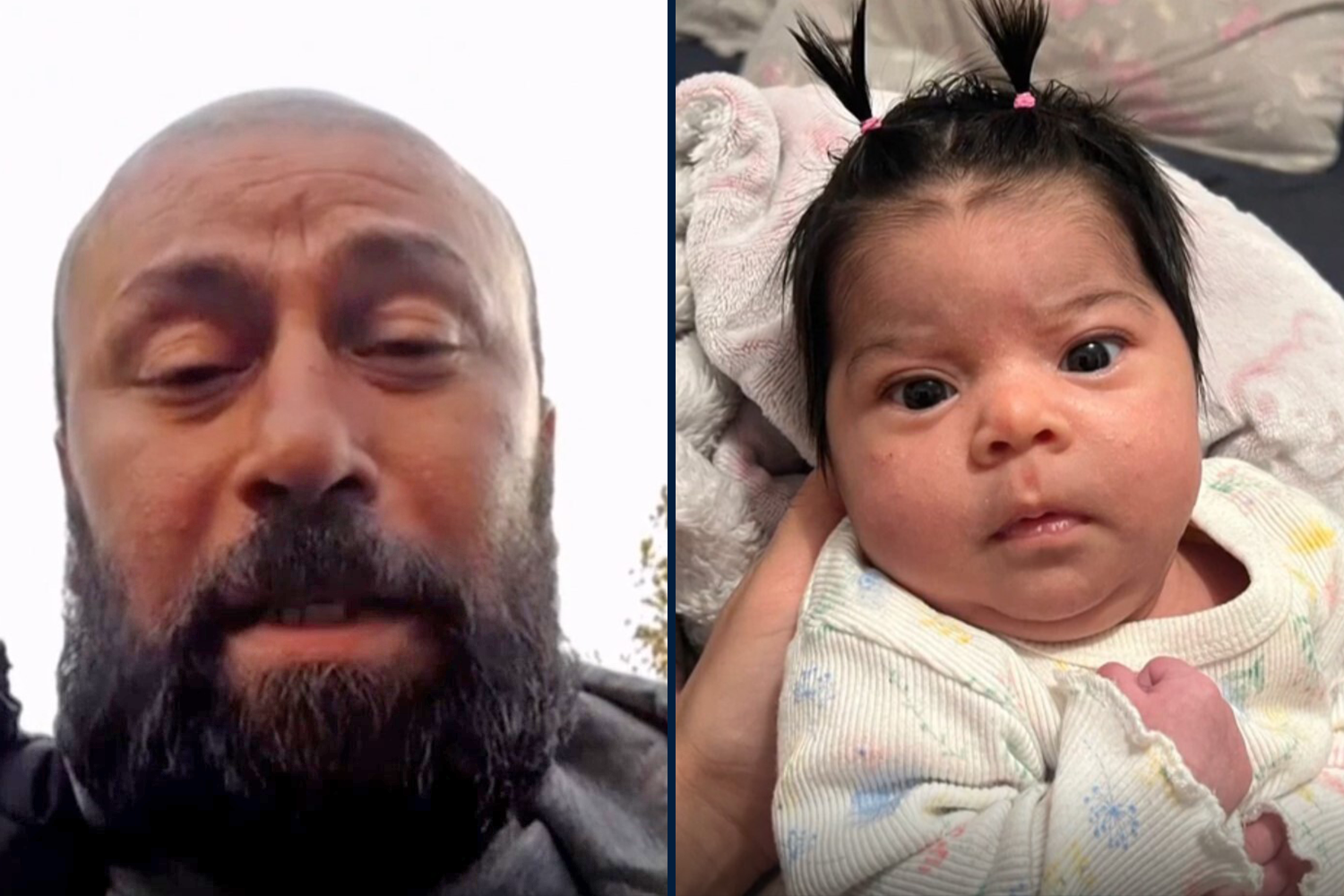
Aras and Maryam
Aras and Maryam
“The dinghy burst ... everyone fell on top of each other ... She went into the water but I brought her up, then a few others fell on us and then she went into the water and I brought her up for the second time, then others fell on me and then she slipped from my hand, and fell in the water the third time, and I lost her.”

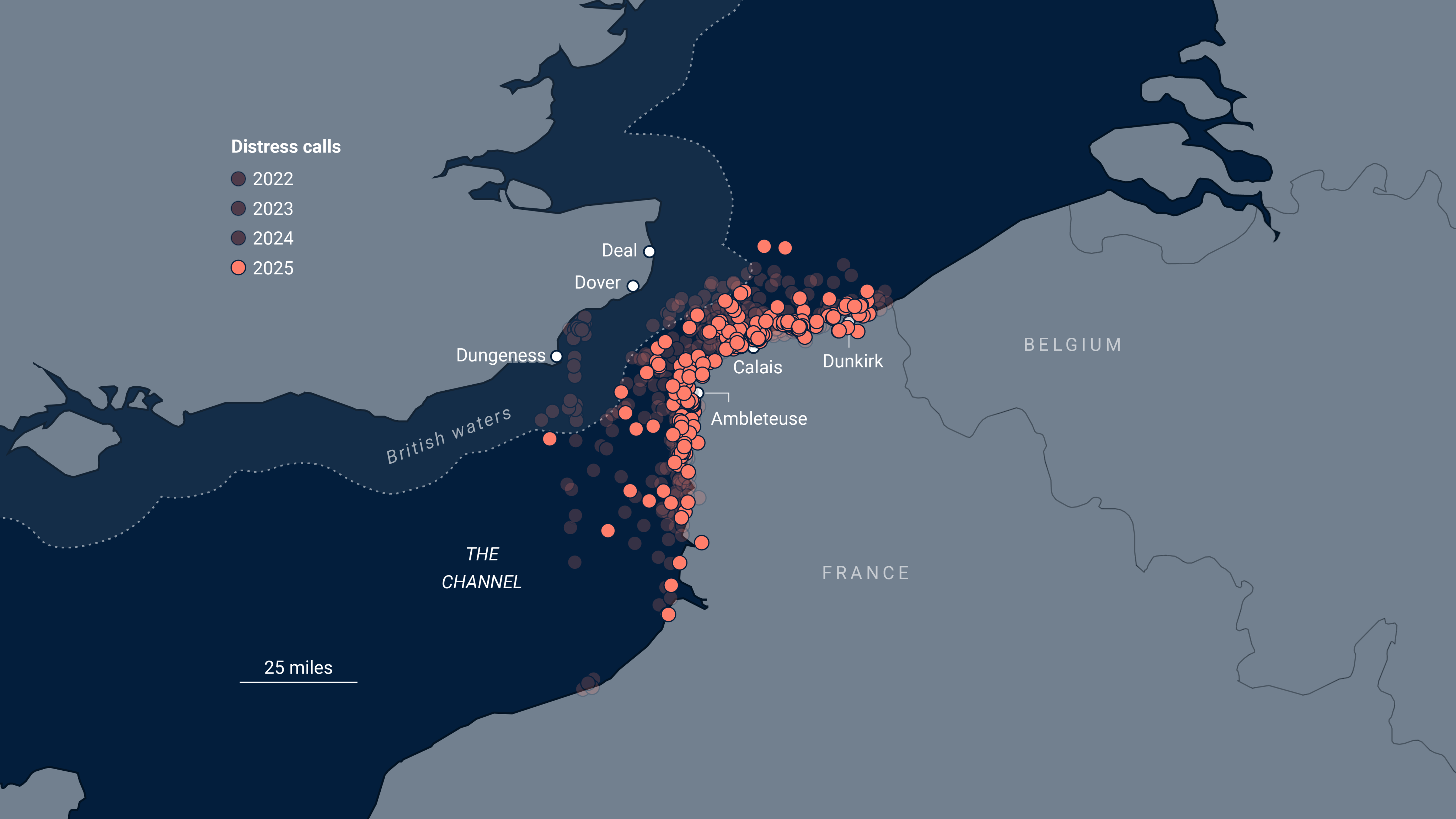
In 2025 shipwrecks, sinkings and near-drownings have become part of daily life for those in the makeshift camps around Calais and Dunkirk. Utopia 56 has received 229 distress calls so far this year.
In August alone French coastguards rescued 559 people from the sea.
The vessels observed by Philpott have been dwarfed by new mega boats, carrying more and more migrants:


Some recorded by Utopia 56 carry as many as 100 young men astride the inflatable hull; women and children are inside on the sheet-plastic floor.
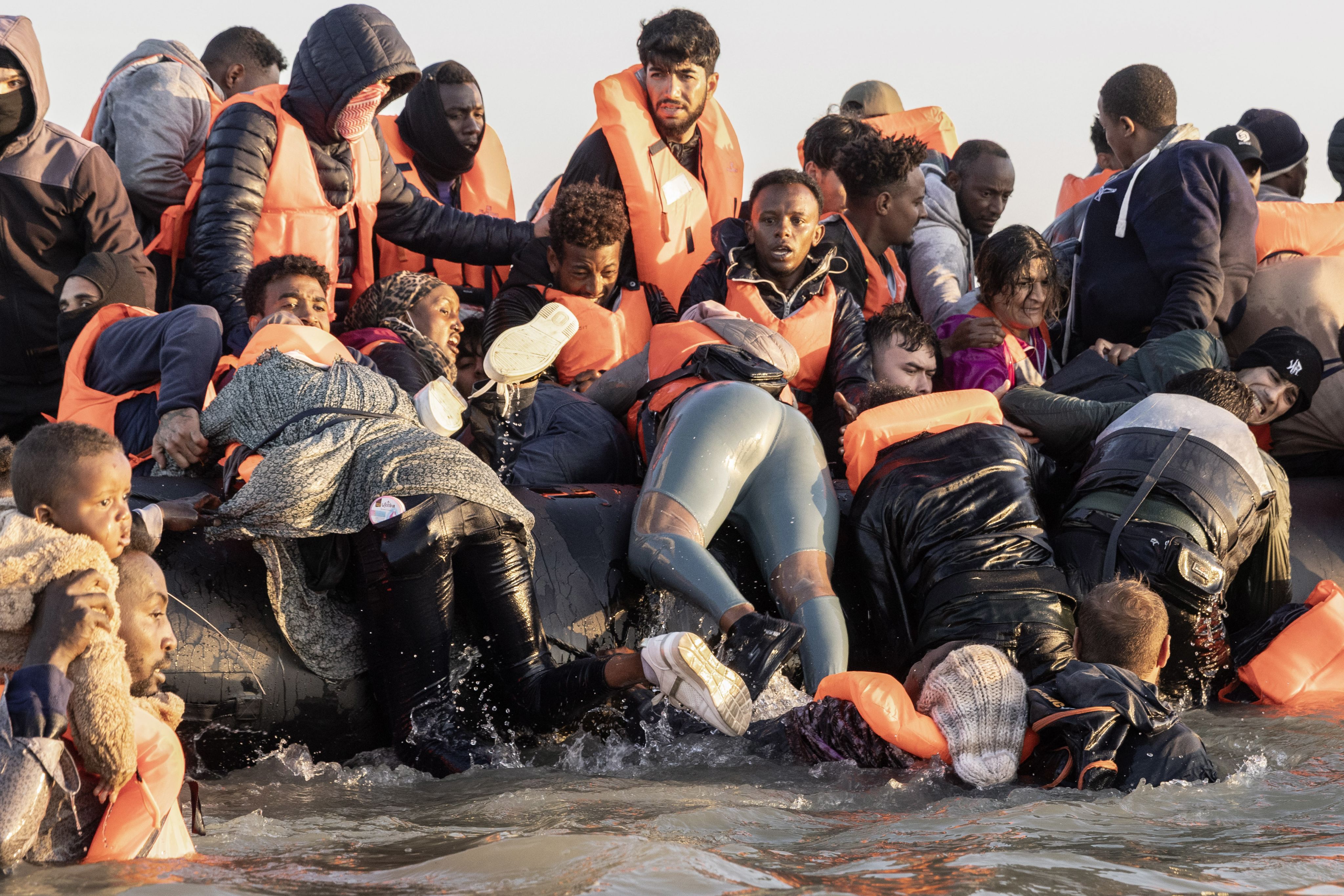
Migrants crowd on to a boat at Gravelines beach near Dunkirk (Times photographer Jack Hill)
Migrants crowd on to a boat at Gravelines beach near Dunkirk (Times photographer Jack Hill)
In September a new record was set for migrants packed into a single boat: 125. The quality of the vessels is not believed to have improved.
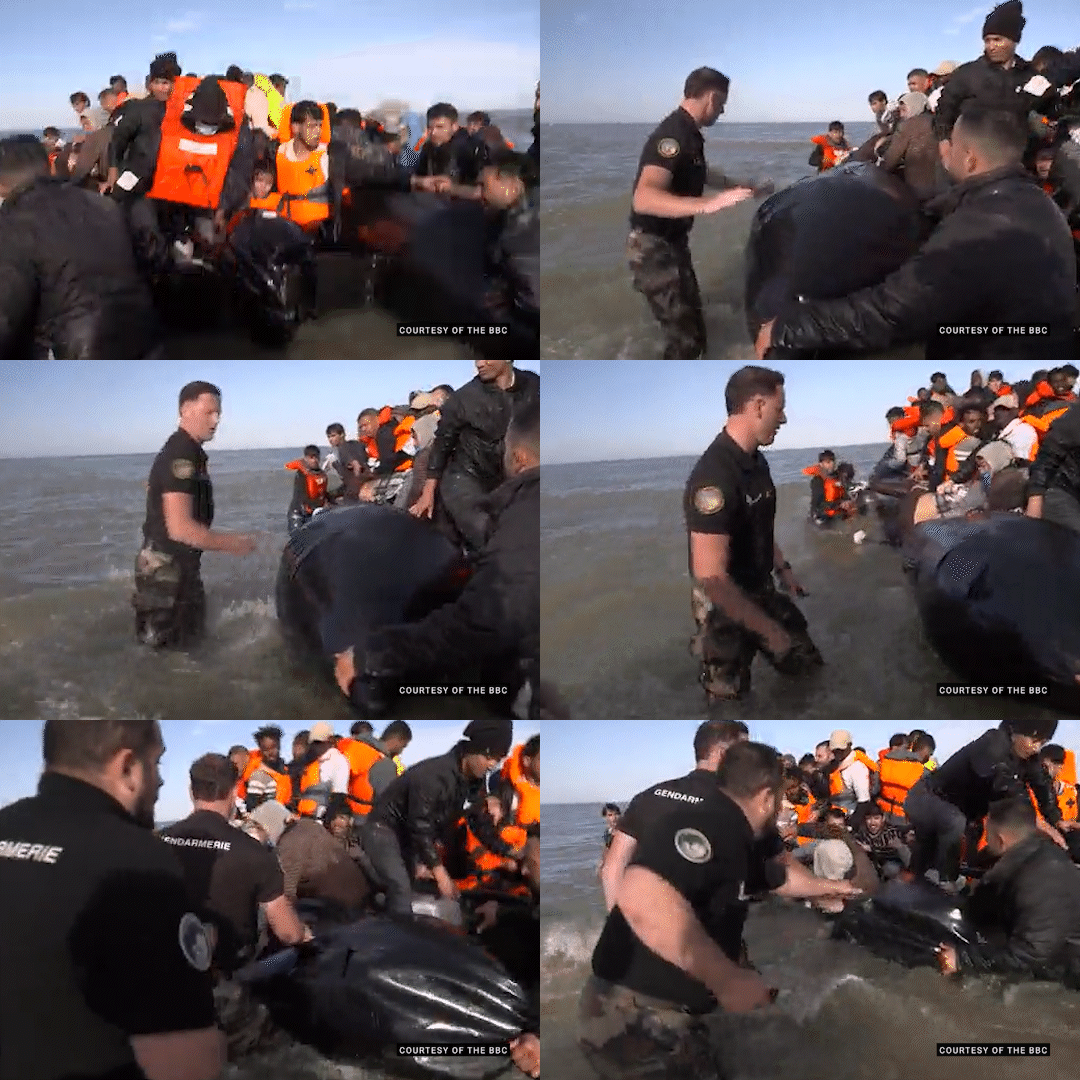
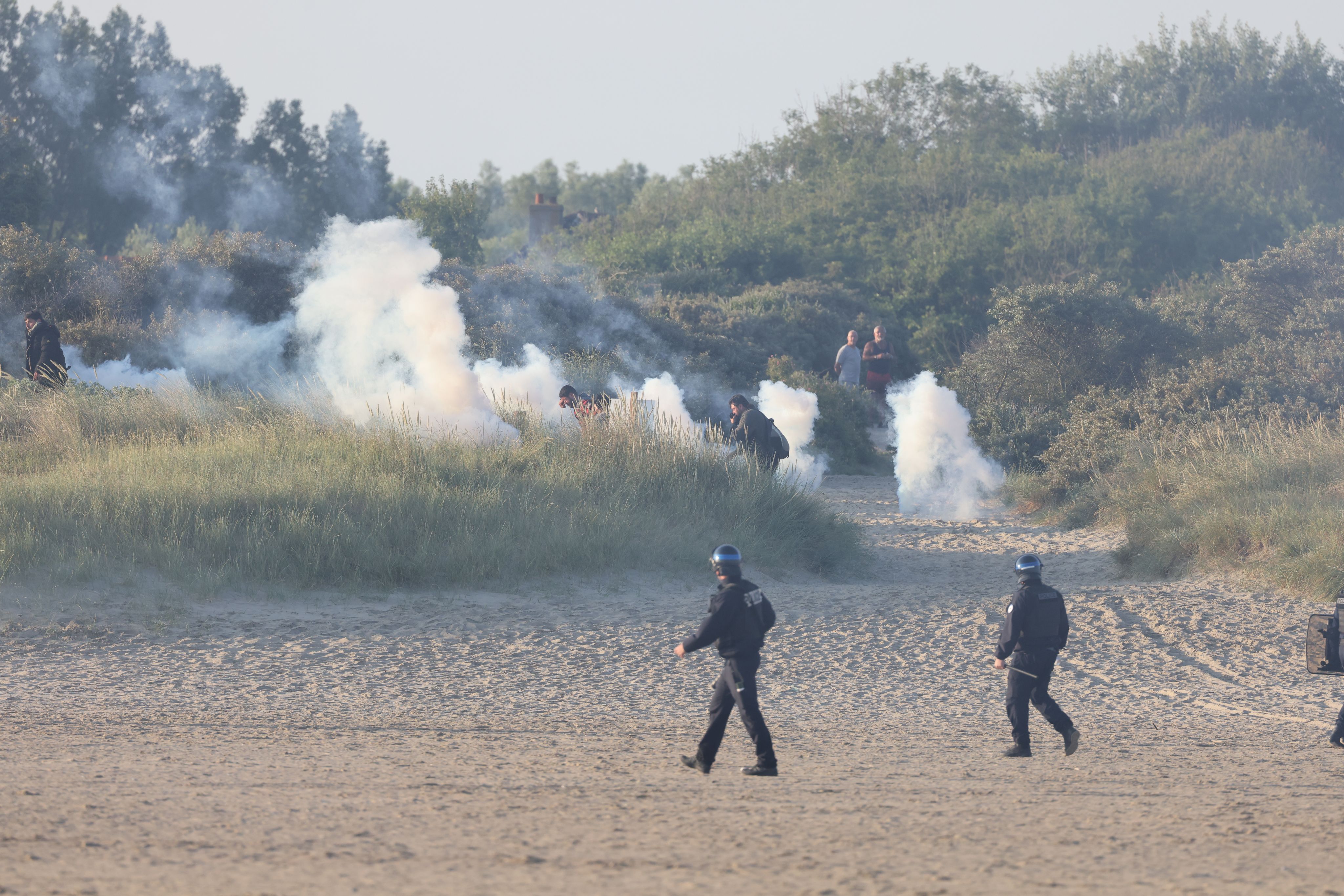
Some make dozens of attempts to reach Britain, battling police who slash boats and use teargas on the beaches to stop them entering the sea:


(Times photographer Jack Hill)
(Times photographer Jack Hill)
On a dusty August day, amid the strewn rubbish and open sewers of the Grande-Synthe refugee camp, Haitham Mohamed, 27, lifted his T-shirt to show livid purple bruises and burns across his stomach and flank.

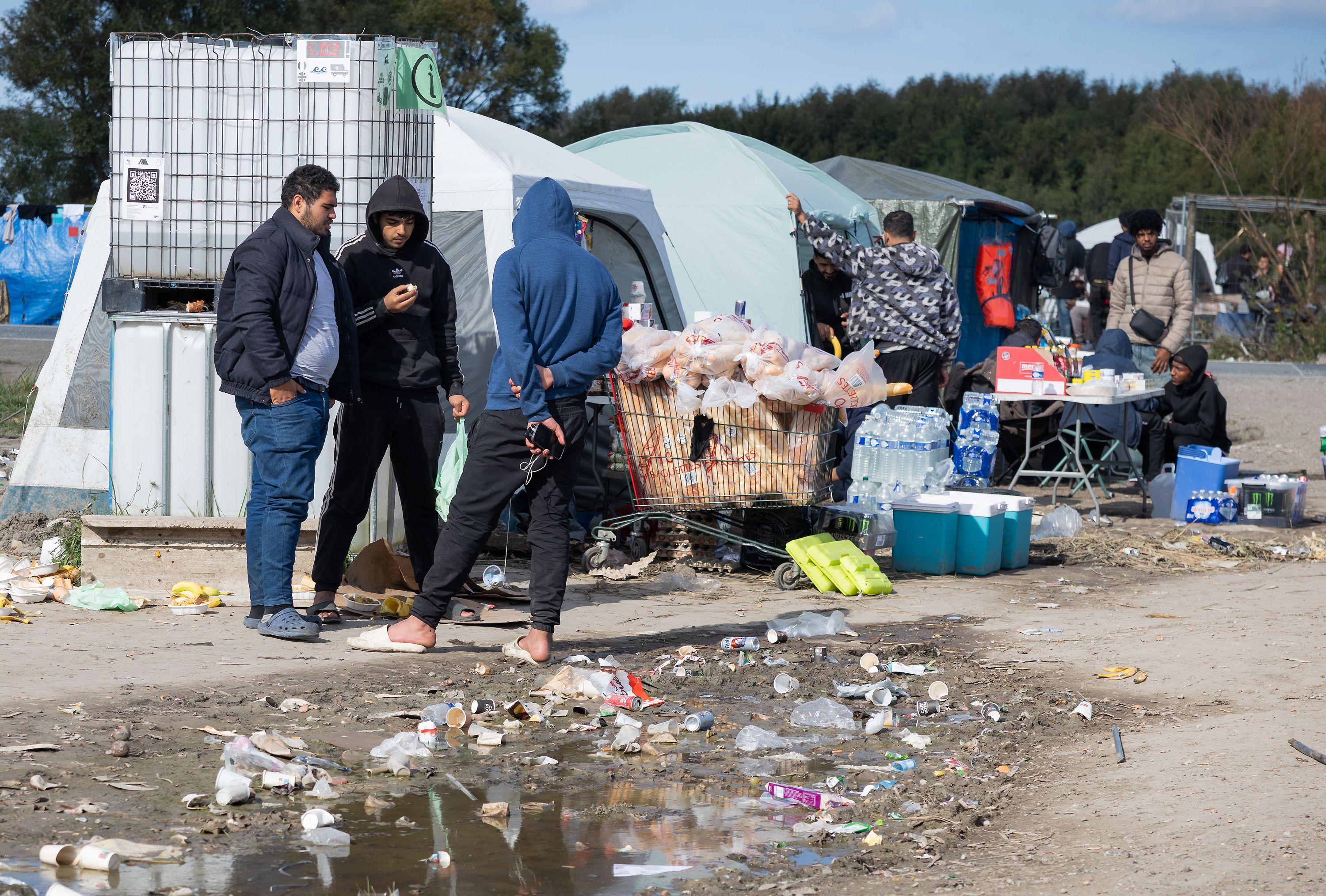
The Grande-Synthe camp (Peter Macdiarmid for The Times)
The Grande-Synthe camp (Peter Macdiarmid for The Times)
Mohamed, from Iraqi Kurdistan, had been rescued the previous day by the French coastguards with 37 others, after their boat’s engine leaked oil and caught fire.
“Someone dumped the oil, but my bag was in the bottom of the boat,” he said. “It caught fire and everything burnt.”
They had left France at about 5am from a beach near Boulogne, carrying about 80 people, and were nearly at the British border after two hours at sea when the oil began to leak. The passengers pushed the engine overboard and extinguished the fire, but were left with no propulsion towards Britain.
“We were nearly at the border, but not in British waters yet,” Mohamed said. “They asked us if we wanted to go back, because the motor was broken.”
Burnt, missing their possessions and fearing disaster, 38 migrants including Mohamed asked for rescue from a nearby French coastguard vessel.
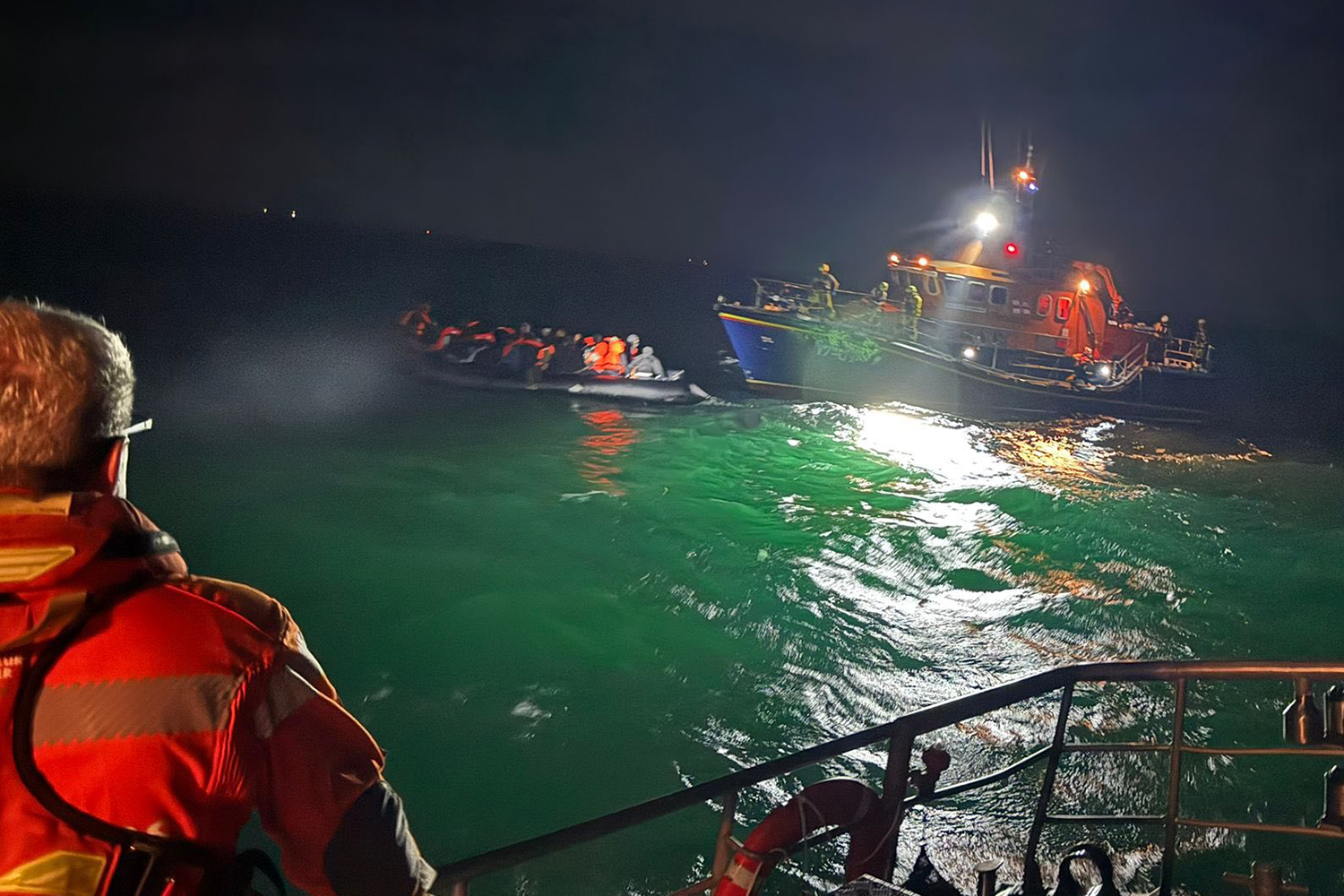
A rescue by French coastguards
A rescue by French coastguards
The others attempted to continue, drifting without an engine towards Britain, before eventually accepting rescue and returning to France.
Mohamed had previously attempted to settle in Austria, where his son and partner live, but had not been granted asylum. He had grappled with the risks of getting on a boat. “My son had said to me, ‘Papa, when are you coming back?’ ” he recalled. “I ask myself the same.”
The accident has deterred him from trying again, though he said he was unsure what he would do instead.
“Thank God, we came back,” he said. “Never again.”
 Built with Shorthand